INCISE ACADEMY / APPLICATION GUIDE

INCISE Terrace application guide

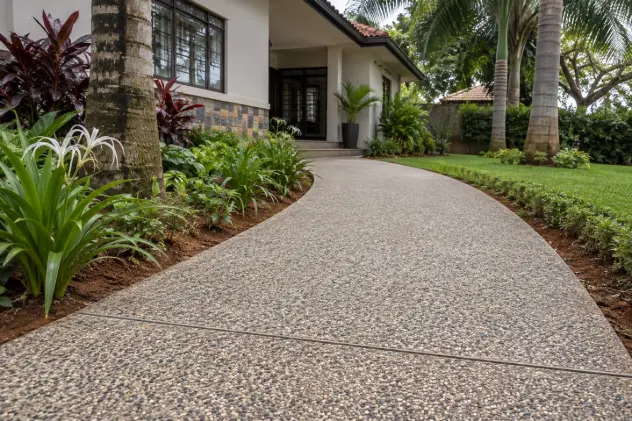
Natural stone gives Terrace its colour and texture. The factory blend combines polymer-modified microcement binders with selected natural aggregates of approximately 4 mm. Add clean water, lay the mix as a bonded overlay, then brush and wash the surface as it sets to reveal the stone.

Follow the application

Where the stone sits.

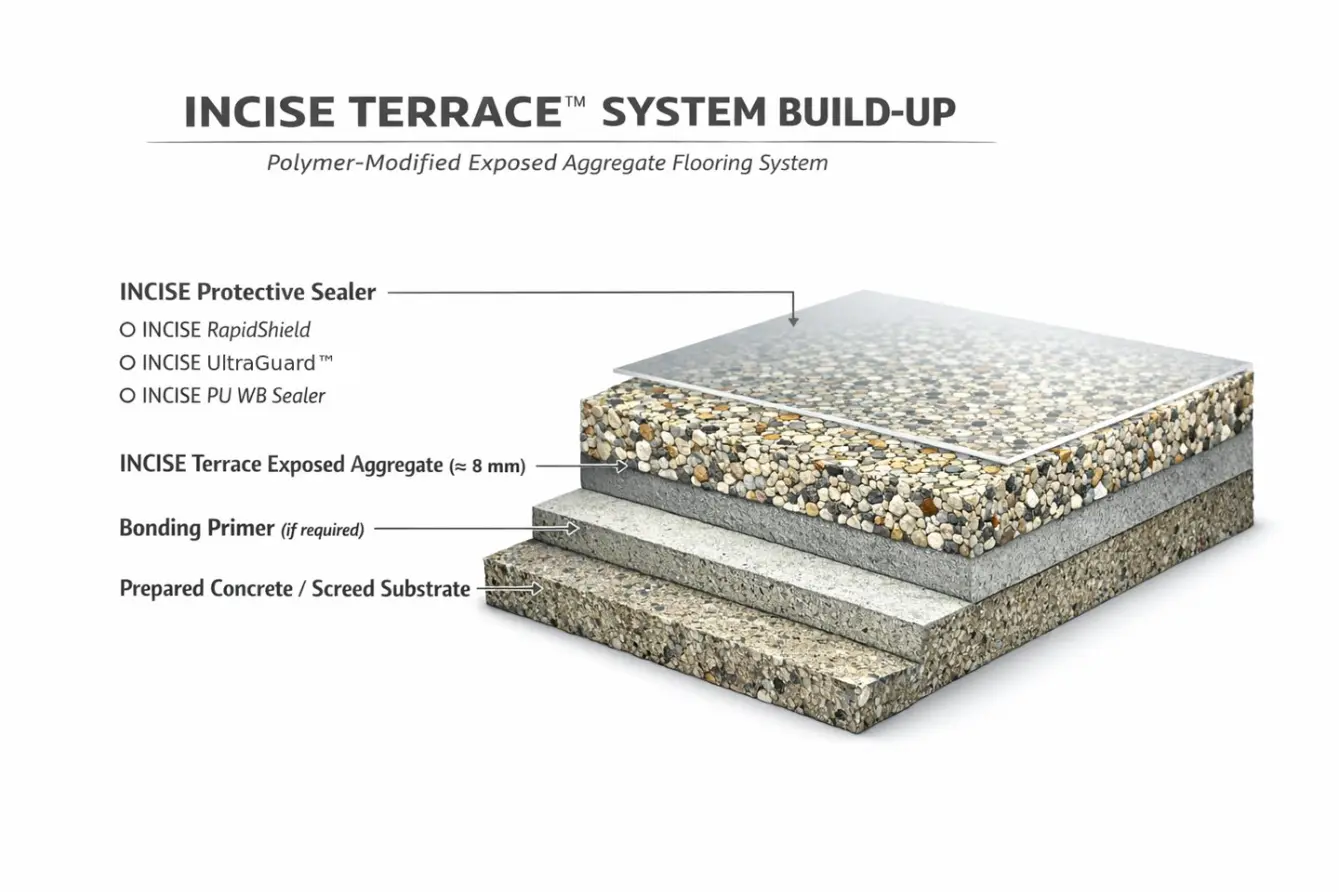
Over prepared concrete or screed, use the specified bonding primer where required, then approximately 8 mm of Terrace and an appropriate INCISE protective sealer. Preserve the substrate joints.

Measure the water before opening the bucket.

Dry blend25 kg bucket
Total water5–6.25 L
Approximate coverage1.2 m² per bucket

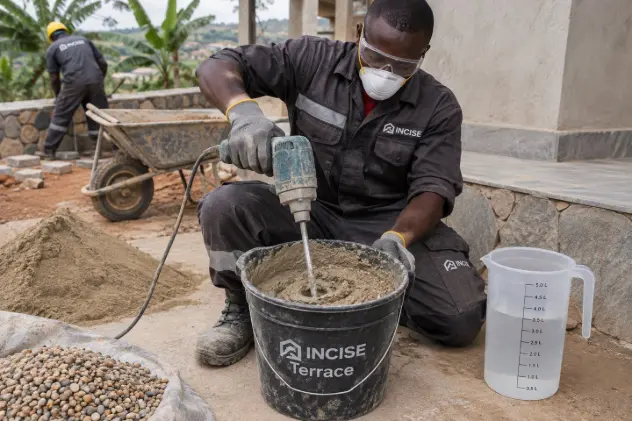
Use clean water at approximately 20–25% of dry product weight: 5–6.25 L for one 25 kg bucket. Terrace is already polymer-modified; no separate liquid polymer is required. For custom tones or greater colour intensity, disperse 1 kg INCISE Colour Pigment in 20 L clean water. Count the measured pigment solution as part of the batch water, not as an addition to it.

At approximately 8 mm, allow about 20 kg/m², or approximately 1.2 m² per sealed 25 kg bucket. Flatness, technique, depth of exposure and site conditions affect actual yield. Confirm consumption on a trial area.

Tools and equipment

Mechanical floor preparation equipment and vacuum; clean mixing vessel, scale, graduated water measure and mechanical mixer; straightedge, screed tools and steel trowels; brushes, wash water and runoff collection; suitable sealer applicator and PPE.

From prepared concrete to exposed stone.

01

Prepare the substrate

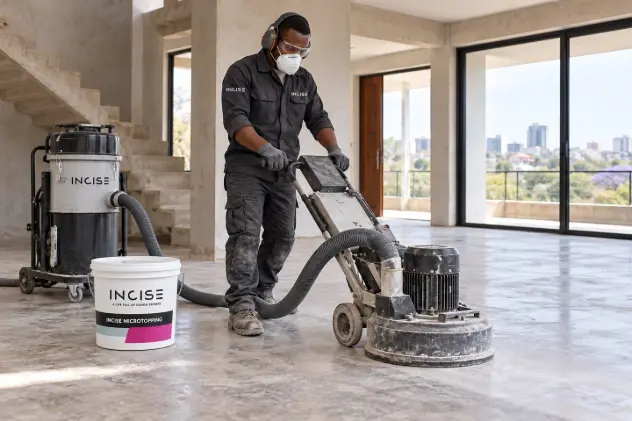
Use a structurally sound, fully cured concrete or cement screed. For new concrete or screed, use the established INCISE preparation baseline: at least 25 MPa and at least 28 days of curing. Check levels, falls, drainage and joints.

Application detail

Mechanically remove weak material and contaminants, including oil; vacuum dust. Continue movement and expansion joints through the overlay. Where the project specifies a bonding primer, prepare and apply it to its own instructions.

Site check: A clean, sound bonding surface with a clear joint layout.
02

Set the colour and water dose

For custom tones or greater colour intensity, disperse 1 kg INCISE Colour Pigment in 20 L clean water. Count the measured pigment solution as part of the batch water, not as an addition to it.

Application detail

Agree a trial sample for stone blend, colour and degree of exposure. Measure the same water and pigment quantities for adjoining batches. If no added pigment is required, use clean water alone.

Site check: All liquid is measured within the total water allowance.

03

Mix the pre blend

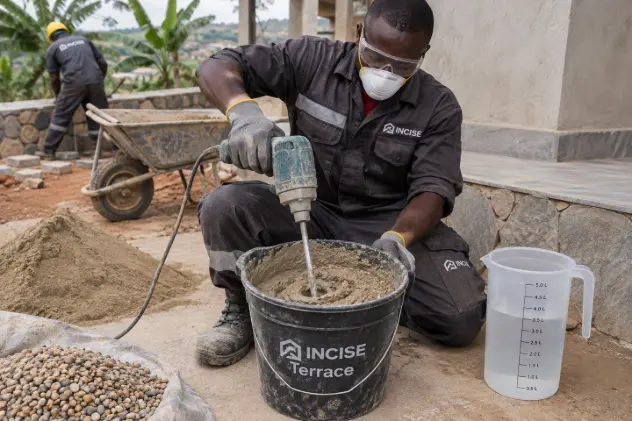
Use clean water at approximately 20–25% of dry product weight: 5–6.25 L for one 25 kg bucket. Terrace is already polymer-modified; no separate liquid polymer is required.

Application detail

Place the measured water or pigment solution in the mixing vessel. Gradually add the dry Terrace while mixing mechanically until homogeneous, smooth and workable. Rest briefly, then remix before placing. Excess water can reduce surface strength and durability.

Site check: No dry pockets; stone and colour are evenly distributed.

04

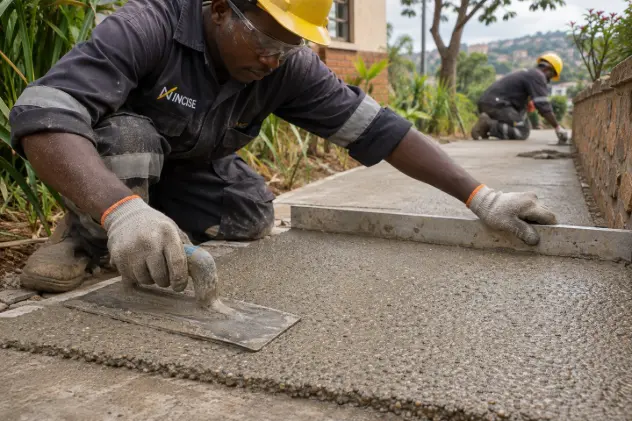
Lay, compact and level

Spread the material onto the prepared substrate with screed tools and steel trowels. Compact evenly and strike to the designed level and falls, targeting approximately 8 mm thickness.

Application detail

Work to the planned boundaries and keep the aggregates evenly distributed. Maintain the substrate joints rather than covering them with the decorative mix.

Site check: Consistent depth and aggregate distribution, with no hollows or bridged joints.

05

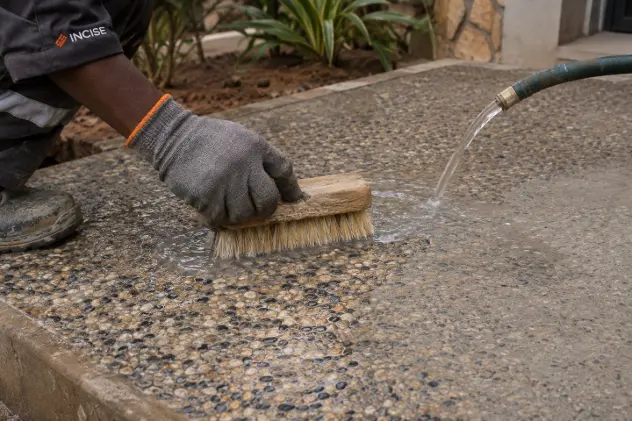
Test the wash, then expose the stone

Begin testing once the surface starts to set. The typical wash window is 8–24 hours after laying, depending on site conditions. Test a small area before committing the whole bay.

Application detail

Use water and brushing to lift the surface paste. If stones pull out, stop and allow more set. Match the approved sample; wash timing and brush pressure determine the final exposure. Collect wash water and residue.

Site check: Stone faces are visible, evenly exposed and firmly held in the binder.

06

Protect the overlay and seal

Protect the young surface and follow the project curing regime. Do not confuse the early aggregate wash with full curing. Once the surface meets the selected sealer’s dryness and preparation requirements, clean away any remaining residue.

Application detail

Use INCISE RapidShield, UltraGuard™ or PU WB Sealer as specified for the exposure and traffic. Follow the selected sealer’s application, recoating and cure requirements. Protection improves stain resistance and long-term durability.

Site check: Texture and sheen match the sealed sample; no sealer pools between stones.

07

Release for use

Typical Terrace milestones are foot traffic at 24–48 hours, light residential vehicle traffic at 5–7 days and full cure at 28 days. These are indicative overlay timings, not a fixed sealing date.

Application detail

Release the floor only when both the overlay and its sealer are ready for the intended use. Confirm the client’s cleaning method and retain the sample, batch details and selected sealer for future maintenance.

Site check: Traffic, exposure and protection have been checked before handover.

When can the terrace be used?

Typical Terrace milestones are foot traffic at 24–48 hours, light residential vehicle traffic at 5–7 days and full cure at 28 days. These are indicative overlay timings, not a fixed sealing date. Release the floor only when both the overlay and its sealer are ready for the intended use. Confirm the client’s cleaning method and retain the sample, batch details and selected sealer for future maintenance.

Ask INCISE Technical