Lift the dust.
Use a soft broom, dry microfibre mop or vacuum with a suitable soft floor head. Remove sand and grit before mopping so they are not rubbed across the sealer.
The everyday moments make a home. A little everyday care keeps its surfaces looking their best.
Simple cleaning. Thoughtful protection. The right advice when your finish needs attention. Here’s how to look after your INCISE floors and walls.
Your daily routine ↓Ask about your surface ↗
Clean floors daily. Remove dust and grit first, then damp-clean as needed for the traffic and use of your space. Daily care does not mean soaking the floor.
Use a soft broom, dry microfibre mop or vacuum with a suitable soft floor head. Remove sand and grit before mopping so they are not rubbed across the sealer.
Use a clean, well-wrung microfibre mop and a mild, pH-neutral cleaner approved for your sealer. Follow its dilution instructions. Change dirty water and remove cleaner residue as directed.
Pick up excess moisture. Allow the surface to dry before walking on it. In busy premises, clean in sections and keep people away from wet areas.
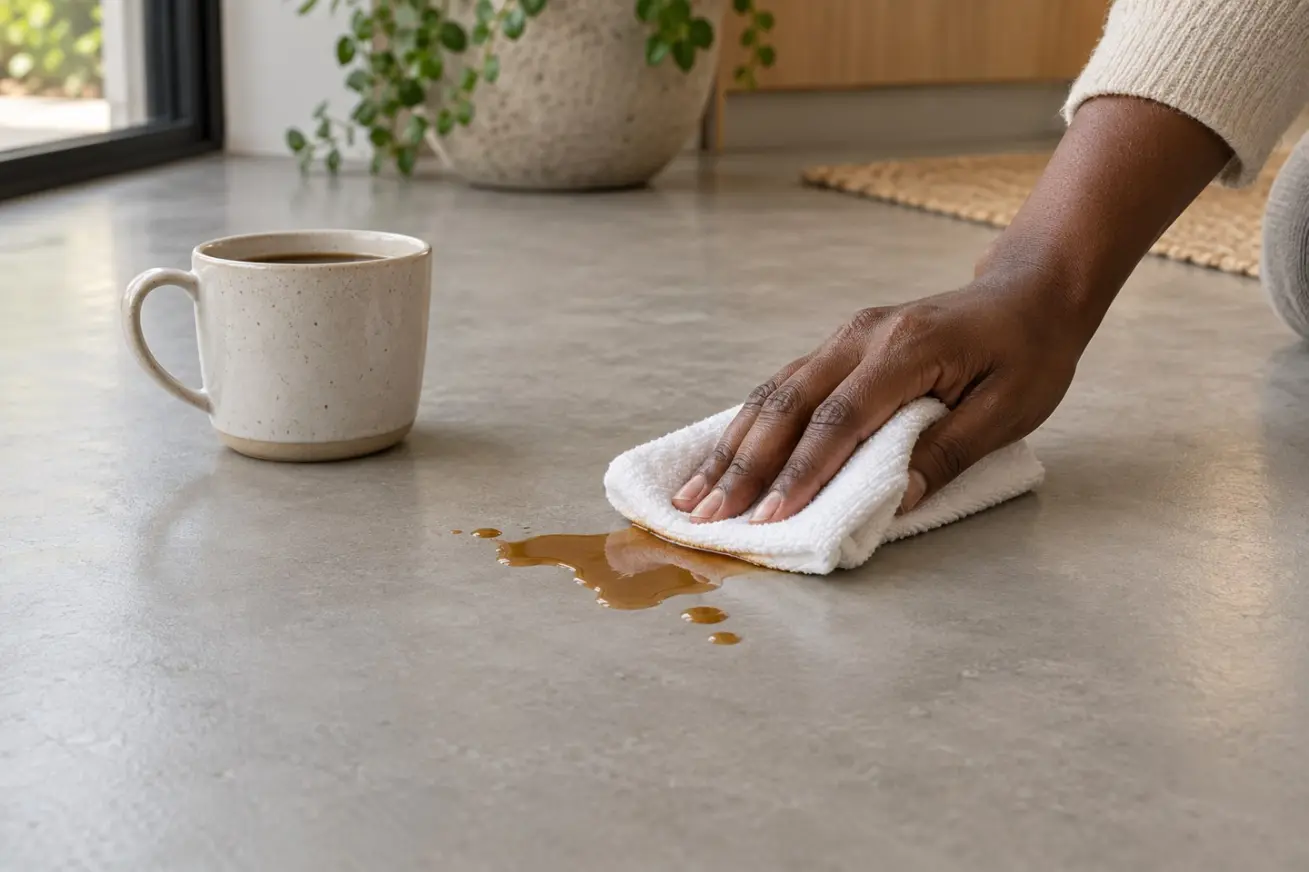
Tea, coffee, wine, cooking oil and other spills should be removed promptly. Blot with a soft absorbent cloth, then gently clean with the approved cleaner and dry.
Do not leave liquids to sit or attack a stubborn mark with an abrasive pad. If a mark remains, contact INCISE before trying a stronger chemical.
A protective sealer improves resistance. It does not make every spill harmless or every surface stain-proof.
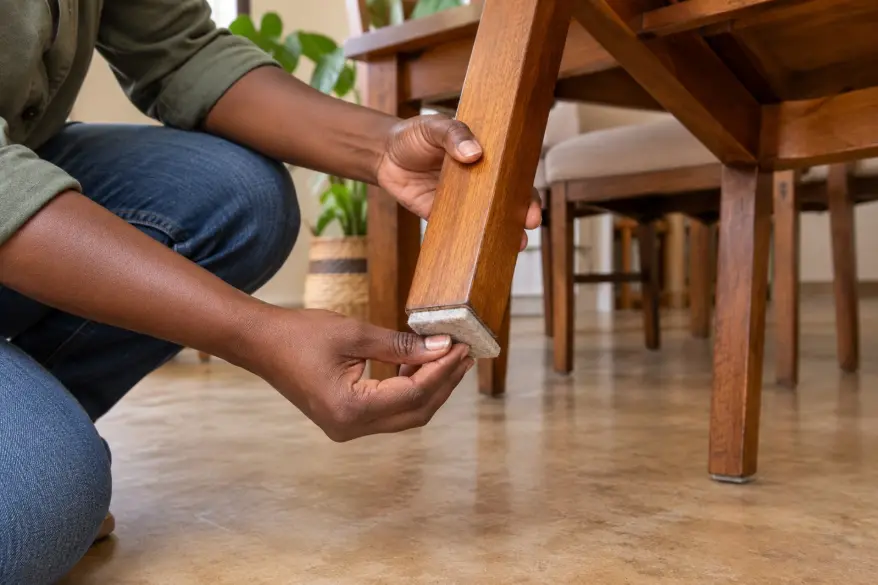
Choose furniture with broad, smooth feet. Fit clean felt pads or suitable non-marking furniture glides beneath chairs and tables, and replace them when worn or embedded with grit.
For rolling chairs, use suitable soft castors and a compatible, smooth-backed protective chair mat. Clean underneath it regularly. Avoid spiked mat backing and hard, narrow wheels.
Lift furniture when moving it. Sharp legs, concentrated loads and dragging can scratch or damage a sealer—just as they can on timber and other finished floors. Thoughtful protection is part of caring for a quality surface.
Check rubber feet and mat backings with INCISE first: some materials can leave marks or discolour coatings.
For deeper cleaning of compatible resin floors.
When everyday cleaning is not enough, ask about INCISE Cleaner. Our team will confirm its suitability for your floor and sealer, along with the correct dilution, contact time and rinsing method.
Follow the current label and safety instructions, and test a small inconspicuous area first. Do not assume the same cleaner or concentration suits every decorative finish.
Ask about INCISE Cleaner ↗| When | What to do |
|---|---|
| Every day | Remove floor dust and grit. Check busy entrances. Damp-clean as needed. |
| As soon as it happens | Remove spills, dry excess water and address leaks. |
| Regularly | Wipe walls as needed. Clean mats, check furniture pads and look for changes in the sealer. |
| When traffic or wear calls for it | Arrange approved deep cleaning or a professional sealer assessment. There is no single recoating interval for every floor. |
A worn sealer can often be renewed without replacing the entire decorative floor. The right method depends on the existing sealer, its adhesion, contamination and the depth of any damage.
Contact INCISE and a licensed applicator. Share photographs, your location, the finish and sealer if known, and what caused the mark or wear.
The applicator cleans and prepares the surface as specified. This may involve controlled light abrasion; removal of a failed coating is only undertaken where necessary. Aggressive grinding can cut into the decorative layers.
A compatible sealer is applied to the specified coat build-up after preparation and compatibility checks. Respect its cure time before traffic, cleaning or water exposure.
Local repairs may show a difference in colour or sheen. Deeper scratches, cracks, peeling or moisture damage need assessment of the underlying cause; they are not always solved by another coat of sealer.
Request care & repair advice ↗Follow the handover instructions for your exact system and sealer. Full cure and return-to-service times vary. Do not assume a surface that feels dry is ready for wet cleaning, mats or heavy furniture.
No. Durable finishes still benefit from sensible care. Removing abrasive grit, protecting furniture contact points and maintaining the sealer help preserve the appearance and protection you selected.
Have INCISE or a licensed applicator assess it first. Preparation, sealer compatibility and curing are important. Grinding off the coating indiscriminately may damage the thin decorative finish beneath.
Send one photograph of the whole area, close-ups of the affected surface, your location, installation date if known, product and sealer details, and the cleaner or incident involved. Do not apply further chemicals while awaiting advice.
From your first clean to a future refresh, speak to INCISE for guidance suited to your surface.